
Eagle Profile
Greetings from the highest skies. I am Arion, a proud eagle who spends most of the day gliding above mountains and forests. The wind is my companion, and the vast sky is my home. I have sharp eyes, strong wings, and a free spirit that loves exploring every corner of the horizon.
Habitat:
I live in tall mountain ranges, wide forests, and rocky cliffs. These places give me a clear view of the land below, and enough space to soar freely.
Diet:
I feed on small mammals, fish, and sometimes reptiles. With my powerful vision, I can spot my meal from great distances, and dive swiftly to catch it.
Chicks:
My chicks are born with soft feathers, and curious eyes. They stay in the nest while I bring food, and teach them the first lessons of survival. When their wings become strong enough, I guide them as they take their first flight.

Post:
Just flew across the mountain peaks, and the sunrise looked magnificent.
My chicks practiced flapping their wings today, and I feel proud watching them grow.
The sky is calm, the wind is steady, and life feels perfect above the clouds.
animals.com.tr message
Welcome Arion the Eagle to our community! Greetings to the ruler of the skies. We are happy to have you here.
about eagles,eagle,animals,eagle's sharing,animals.com.tr
eagle sky,animals eagle,animals.com.tr
eagle story,eagle article,about eagle
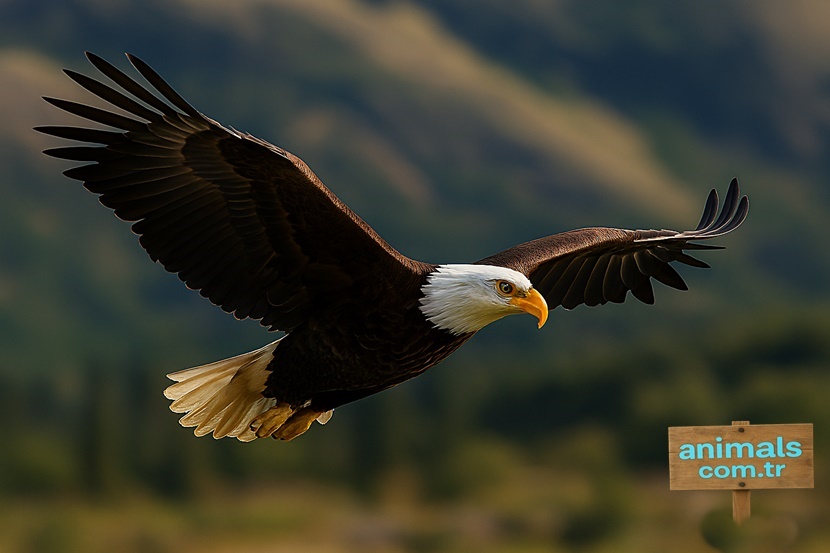
Eagles are apex avian predators that play essential ecological roles across diverse terrestrial and coastal ecosystems.
This article examines their taxonomy, anatomical adaptations, foraging ecology, reproductive strategies, and the conservation pressures impacting global eagle populations. As indicators of ecosystem integrity, eagles provide critical insights into habitat health, trophic structure, and anthropogenic influence.
Eagles belong to the family Accipitridae, a diverse group of diurnal birds of prey. With more than 60 recognized species distributed across all continents except Antarctica, eagles display a wide range of ecological specializations.
Their exceptional visual acuity, powerful flight, and predatory efficiency have made them subjects of longstanding ecological and cultural interest. Modern research focuses on understanding how changing landscapes, climate patterns, and human activities influence eagle survival and distribution.
Eagles: Morphology, Ecology, and Conservation Perspectives
Taxonomy and Evolution
Eagles are classified primarily into four ecological groups: Booted eagles (Aquilinae), Sea eagles (Haliaeetinae), Snake eagles (Circaetinae),Harpy and crested eagles (Harpiinae)
Fossil records indicate that early eagle lineages emerged during the late Oligocene, with subsequent diversification driven by global climatic shifts and expanding woodland and coastal habitats.
Morphology and Functional Adaptations
Vision and Neural Processing
Eagles are renowned for their exceptional vision, estimated at four to eight times sharper than human eyesight. Their retinas contain high densities of photoreceptors, and they possess a deep fovea enabling long-distance target detection. Advanced neural processing allows rapid assessment of motion and spatial detail.
Flight Mechanics
Large wingspans (often exceeding 2 meters in large species such as the Golden Eagle) enable dynamic soaring and energy-efficient gliding.
Robust musculature and a high aspect-ratio wing design support lift generation in turbulent or mountainous regions.
Aerodynamic morphology facilitates rapid dives, reaching speeds over 200 km/h during stooping behavior.
Predatory Adaptations
Powerful talons exert immense pressure for capturing mammals, birds, and fish. Hooked beaks efficiently tear flesh. Highly responsive vestibular systems maintain stability during sudden maneuvers.
Habitat and Distribution
Eagles occupy a broad range of environments including forests, savannas, wetlands, coastal zones, and high mountains. Habitat choice is primarily influenced by prey availability, open flight space, and secure nesting sites.
Golden Eagles (Aquila chrysaetos) dominate temperate and mountainous regions. Bald Eagles (Haliaeetus leucocephalus) prefer coastal and freshwater habitats rich in fish. Harpy Eagles (Harpia harpyja) inhabit tropical rainforests and rely on arboreal prey such as monkeys and sloths.
Diet and Foraging Ecology
Eagles function as apex predators and scavengers. Their diets vary widely: Sea eagles feed extensively on fish and carrion. Booted eagles hunt small mammals, birds, and reptiles. Harpy eagles specialize in canopy-dwelling prey.
Foraging strategies include high-altitude soaring, low-glide ambush attacks, and perch hunting. As top-level predators, eagles regulate prey populations and maintain ecological balance.
Reproductive Biology
Territoriality and Pair Bonds
Eagles exhibit strong territorial behavior and typically form long-term monogamous pairs. Territories may span several square kilometers, depending on prey density and habitat structure.
Nesting Behavior
Eagles build large nests (called eyries) using sticks, often reusing and enlarging them annually. Nests may reach several meters in diameter and are commonly located on cliffs, tall trees, or isolated structures.
Breeding Cycle
Clutch size: usually 1–3 eggs
Incubation: primarily by the female, lasting 35–45 days
Sibling competition: common in many species, where the dominant chick may outcompete its sibling for food
Fledging: occurs between 8 and 14 weeks, followed by extensive parental guidance
Conservation Challenges
Eagle populations face multiple anthropogenic pressures, including:
Habitat loss and fragmentation: Deforestation, urbanization, and agricultural expansion reduce nesting sites and prey availability.
Pollution: Heavy metals, pesticides (e.g., historical DDT impact on Bald Eagles), and veterinary drugs (e.g., diclofenac impact on vultures/eagles in Asia) cause mortality and reproductive failure.
Electrocution and collision: Power lines and wind turbines present significant risks.
Climate change: Alters prey distribution, nesting success, and migratory patterns.
Illegal hunting and trafficking: Feathers, talons, and live specimens remain targets in some regions.
Several species, such as the Philippine Eagle (Pithecophaga jefferyi), are critically endangered, while others—like the Bald Eagle—have made significant recoveries due to targeted conservation measures.
Conclusion
Eagles serve as keystone predators and bioindicators, reflecting the overall health of terrestrial and coastal ecosystems.
Their conservation requires integrative strategies involving habitat protection, pollution control, sustainable land management, and continuous ecological monitoring.
As climate and land-use transformation accelerate, safeguarding eagle populations will remain a global priority for biodiversity conservation.