The Life Journey of a Sea Turtle
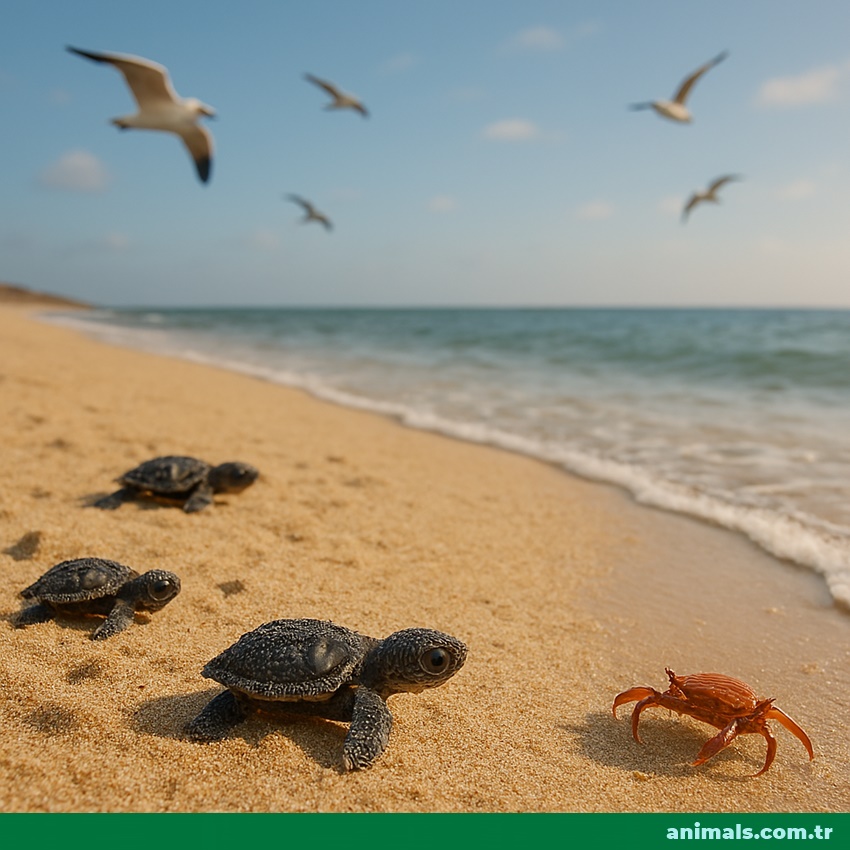
I broke free from my egg beneath the warm sand, and the moment my tiny body touched the air, instinct pulled me toward the shimmering line of the sea.
I was one of the lucky hatchlings who managed to reach the water. Many of my siblings were caught by birds or crabs before they ever felt the ocean for the first time.
The waves swallowed me gently, and the vast blue world became my home. I learned to ride the currents, drifting with floating seaweed where countless young turtles hide from predators. Every day was a test of survival. Shadows moved above and below me, some harmless, others deadly.
As the years passed I grew stronger. My shell hardened. My strokes became confident and wide. I crossed warm tropical waters and followed ancient migratory routes that my kind has known for millions of years. I survived storms that tossed me like a leaf and escaped jaws that snapped inches from my tail.
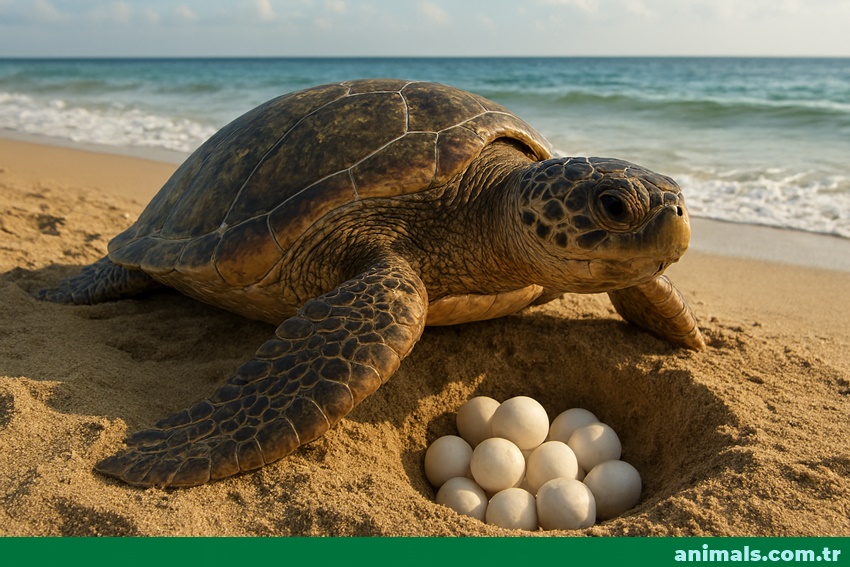
One day I returned to the very beach where my life began.
The moonlit sand felt familiar under my flippers. I dug a deep nest and laid my eggs, burying them safely before slipping back into the sea.
My journey had come full circle, and a new generation awaited its turn to race toward the waves guided by the same instinct that once saved me.
animals.com.tr message
Animals.com.tr thanks the sea turtle for sharing its journey with us and reminding us of the beauty and fragility of ocean life.
Short and Interesting Facts About Sea Turtles
Sea turtles are ancient ocean travelers that have lived on Earth for more than 110 million years, surviving massive climate shifts and even the extinction of the dinosaurs.
Each species begins life in a remarkable way. After hatching beneath warm sand, baby turtles use the glow of the moon and stars to find their way to the ocean.
Only a small percentage make it past hungry birds, crabs, and fish, which is why every surviving hatchling is a true miracle.
As they grow, sea turtles travel thousands of kilometers across oceans, guided by Earth’s magnetic field like a built-in navigation system.
Some species, such as the leatherback, can dive deeper than 1,000 meters, while others graze peacefully on seagrass, helping maintain healthy marine ecosystems.
When a female reaches adulthood, she returns to the very beach where she was born to lay her eggs—a journey that can take decades.
This instinctive cycle connects generations and keeps their species alive. Despite their strength and endurance, sea turtles face threats from pollution, plastic waste, fishing nets, and habitat loss.
Sea turtles are symbols of resilience, long-distance travel, and the delicate balance of ocean life.
Notes
Female sea turtles usually come ashore at night to suitable beaches, where they dig a nest and lay around 100 eggs at a time. This process can take several hours, after which the turtle returns to the sea.
The eggs hatch after about two months, and the hatchlings make their way to the ocean during the night. The mother turtle does not care for the young during this period; she has already left the beach after laying her eggs.
sea turtles, sea turtle facts, baby sea turtles, ocean animals, marine life, sea turtle journey, animals.com.tr, turtle life cycle, marine wildlife, turtle hatching, ocean conservation
about sea turtle,sea turtle facts
about sea turtles facts