
Woodpecker Profile
Hello there!
My name is Woody the Carpenter, I am the hardest working carpenter in this forest. While others fly branch to branch, I spend my days crafting perfect tree cavities, carving safe homes, and tapping out messages across the woods.
Every ring of my beak tells a story — of hard work, rhythm, and the beauty hidden beneath the bark.
Welcome to my world, where every tree is a workshop and every sound is a lesson.
Habitat:
Woodpeckers live in a wide range of environments, but they are most commonly found in:
Forests and woodlands (deciduous, coniferous, and mixed), mountain forests, urban parks and orchards, tree-rich grasslands.
Diet:
Woodpeckers have a varied diet, typically including:
Insects and larvae (Their main food source), ants, beetles, termites, tree sap (especially in sapsuckers), fruits, nuts, and seeds, occasionally small invertebrates.
Their long, sticky tongues help them reach deep into tree bark to extract prey.
Chicks:
Woodpeckers nest in tree cavities they carve themselves.
A typical clutch contains 3–6 eggs.
Both parents often take turns incubating the eggs.
Chicks hatch blind and featherless, depending completely on the parents for warmth and food.
They fledge in 3–4 weeks, learning to climb before they learn to fly.
Young woodpeckers imitate the rhythmic tapping behaviors of adults as they explore their world.

Post:
Today I taught my little ones the fine secrets of carpentry — how to tap with rhythm, how to read the wood, and how to respect every tree we work with.
I hope they’ll carry the craft forward long after my wings grow tired.
The forest always needs good carpenters, and I’m proud to see the next generation already eager to learn.
animals.com.tr message
Your dedication to teaching the next generation of woodpeckers keeps the forest alive and thriving. We’re grateful for your craftsmanship and your inspiring lesson today.
about Woodpeckers,woodpeckers, Picidae, tree pecking, bird drumming, forest ecosystem, insect control, strong beak, bird facts, nature, wildlife
woodpecker forest,animals woodpecker,animals.com.tr
woodpecker story,parrot woodpecker,about woodpecker
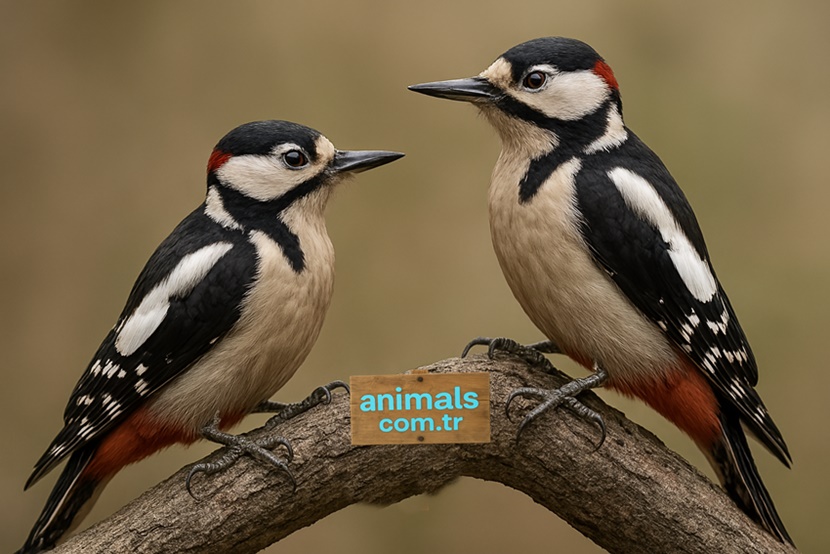
Woodpeckers belong to the family Picidae and include around 200 species worldwide. They are famous for pecking on tree trunks to find insects and larvae hiding under the bark.
Their strong, chisel-like beaks and reinforced skulls allow them to strike wood with incredible force without hurting themselves.
Some species can deliver up to 20 pecks per second, with each strike generating several times the force of gravity on their heads.
Woodpeckers have zygodactyl feet—two toes pointing forward and two backward—which help them cling to tree trunks, and their stiff tail feathers act as support while climbing.
They usually nest in tree cavities, which protect their eggs and chicks. By controlling insect populations, woodpeckers play an important role in maintaining forest health.
In addition to their ecological role, woodpeckers are known for their bright colors and rhythmic drumming, which they use to communicate and mark territory.
Their unique adaptation to powerful pecking makes them one of nature’s most specialized and fascinating birds.